ADA Handicap Obtainable Portable Restroom Rental: Vital Conformity Factors
Portable restrooms are simple to deal with as a final line item. A person orders enough units, picks a delivery place, and moves on to car parking, food, secure fencing, or the following subcontractor. That is usually where trouble starts. Ease of access does not rest off to the side as a courtesy function. It becomes part of whether the restroom configuration is functional in all for lots of people going to an event, visiting a website, or moving via a temporary space.
I have actually seen this play out in extremely regular means. A planner books an ada mobile bathroom but puts it on soft ground after a rainfall. A specialist orders the right matter of units but leaves the easily accessible one boxed in behind barricades. A festival supervisor thinks that since the larger system arrived, the work is done. Theoretically, each of those groups might really feel close to conformity. In method, they have actually misunderstood that accessibility depends upon the path, the entry, the clearances, the identification, and the standard capability to get to and utilize the system with dignity.
If you are organizing an ada portable toilet service, one of the most crucial thing is to assume past the label on the door. A compliant leasing is not just a larger box. It is a temporary facility that still has to satisfy actual availability requirements.
The federal baseline that matters
For portable commode rentals in the United States, the regulating federal availability requirement is the 2010 ADA Standards for Accessible Layout, as interpreted by the Gain access to Board and the Division of Justice. That issues since individuals often rely on habit, supplier shorthand, or obsolete presumptions. Words "wheelchair available" in a sales discussion are not the same as real ADA compliance.
The lawful framework is not abstract. It informs you that momentary arrangements still have access obligations. If you are handling portable single-user systems organized together in a cluster, the scoping regulation is specifically vital. A minimum of 5 percent of the devices in each cluster need to be accessible, which principle uses also at temporary events.
That single factor cleans up a lot of complication. Event coordinators in some cases assume availability requirements relax since the installation is only there for a weekend. They do not. Temporary does not suggest optional.
The 5 percent regulation is straightforward, but people still defalcate it
The scoping requirement appears simple, yet this is where several rental orders drop off training course. If you develop a collection of portable single-user bathroom units, a minimum of 5 percent of that cluster should be accessible. The key expression is "in each cluster." That means availability is not dealt with by positioning one available unit elsewhere on the home and treating it as insurance coverage for every washroom bank.
This issues on big websites. If an outside performance has toilet areas near the entryway, near the food court, and near a VIP area, the accessible-unit count has to be considered at the collection degree, not simply in an overall sitewide matter. The practical reason is obvious. A person needs to not need to travel throughout the premises because the only ada compliant mobile toilet was put in a different zone.
When the math produces a fraction, planners must not obtain cute regarding rounding down in spirit. The safer, much more respectful approach is to ensure the collection in fact includes the needed easily accessible visibility. Availability is one of those locations where dealing with the minimum as a challenge to resolve normally causes bad placement and dissatisfied users.
An available portable restroom needs to be identified
Another factor that gets overlooked is signage. Obtainable mobile commode devices need to be identified with the International Symbol of Ease Of Access. This is not ornamental. It aids people locate the correct center without needing to inspect every door straight or ask for help.
That might seem minor till you envision a congested fairground at dusk or a jobsite with dust, devices, and aesthetic mess. A properly significant ada handicap accessible mobile bathroom minimizes unpredictability and speeds up gain access to. It additionally indicates to team and security teams that the system offers a details objective and should not be obstructed with supplies, trash, secure fencing, or parked carts.
I have seen available systems come to be informal storage area since they are larger. That is not a safe comfort. A visibly recognized system is still just valuable if the configuration around it appreciates what that icon means.
The route to the bathroom becomes part of compliance
This is where numerous otherwise well-intentioned arrangements stop working. Portable accessible devices need to have an available path and entryway. If ramps or touchdowns are needed, those attributes additionally need to abide by the ADA technological requirements.
That suggests conformity does not begin at the threshold. It begins where an individual starts coming close to the device. If the path is blocked, unsteady, muddy, high, or interrupted by temporary barriers, the available bathroom might be functionally not available even if the device itself is technically the appropriate model.
This is one of the most vital judgment calls in the field. A bathroom supplier may supply an ada easily accessible mobile bathroom that appropriates in itself, however the site host still regulates placement. If the host selects an area across deep gravel, behind a lip in the sidewalk, or past a narrow chicane of crowd-control fencing, the real-world outcome can be noncompliant and unusable.
The route issue comes to be a lot more crucial on short-lived occasion grounds due to the fact that surface areas alter fast. A dry verdant path on Friday can come to be rutted and soft by Saturday afternoon. Deliveries, generators, and foot web traffic can change gain access to after setup. The lesson is basic: accessibility should be examined once more after the units are set and again as the website begins operating.
Inside the device, technological requirements still apply
The Gain access to Board advice explains that mobile units must satisfy toilet-room technological needs, including component clearances, transforming room, and door maneuvering clearances, plus relevant grab-bar and water-closet clearance rules.
That sentence lugs a lot of weight. It informs you that an ada certified easily accessible portable toilet is not certified just because it is larger than a conventional system. Inside use matters. People require enough area to get in, maneuver, setting themselves, and utilize the components with the aid features the requirements require.
It is worth stopping briefly here due to the fact that this is where advertising and marketing language commonly gets slippery. Suppliers may promote an ada portable toilet, an ada-compliant portable commode, or ada compliant mobile bathrooms in wide terms. Those phrases are useful only if the real system supplied aligns with the technical demands. A bigger shell without the right clearances or interior attributes is not an actual substitute.
I stay clear of acting that every coordinator needs to remember technological measurements. Most do not. But they do need to know what to validate with the vendor and what to evaluate on arrival. The wide compliance categories are not optional information. Transforming area, clearances, and steering space are the distinction in between gain access to theoretically and access in practice.
Why placement blunders happen so often
A great deal of positioning mistakes originate from operational stress, not bad intent. Groups are trying to stabilize truck gain access to, pump-out access, aesthetics, group flow, and offered space. The easily accessible system, because it is typically larger, obtains pressed to the margins. It might be positioned where the delivery van can unload it fastest, where there is leftover space behind an outdoor tents, or where it "won't remain in the way."
That impulse typically creates a bad outcome. The best place for an ada certified mobile commode is not the last open slot. It is a location individuals can actually get to and use without unique assistance. In some cases that indicates giving up a cleaner sightline or shifting a barricade run. Occasionally it means considering drain before the unit arrives. Those are clever trade-offs. Accessibility often obtains much easier when it belongs to the initial site plan as opposed to a correction after setup.
Another usual trouble is dividing the obtainable unit as well far from the other washrooms. People do this with great objectives, presuming additional area around it will aid. Often it does. In some cases it leaves the user isolated in a less visible, less practical, or less safe-feeling location. Access should sustain equivalent usage, not create a side course unless site restraints really call for it.
The construction-site exemption needs cautious handling
There is an essential subtlety in the criteria history that people occasionally exhaust. The ADA Standards distinguish portable toilet units at building and construction websites utilized specifically by building and construction workers, which are exempt from the portable-toilet access scoping demand in the mentioned 1991 criterion. That does not create a blanket exemption for each mobile bathroom at every construction-related location, and it does not get rid of the accessible-unit need for general portable commode rentals.
This distinction matters due to the fact that it is simple for task teams to hear "building and construction site" and stop the evaluation there. The actual context issues. If you are arranging mobile commodes for the public, site visitors, or occasion participants, the accessible-unit requirement remains pertinent. The exception language must not be used as a faster way to prevent planning easily accessible service where the public is involved.
That is just one of those edge instances where a fast discussion can conserve a lot of problem. Ask that will certainly use the devices, whether the configuration is specifically for construction personnel, and whether the leasing belongs to a general-access environment. Those questions are far better than depending on presumptions tied to the job type.
What tenants should confirm prior to delivery
If you are positioning an order for ada compliant portable bathrooms, a short confirmation step can avoid expensive reshuffling later. The goal is not to end up being a code specialist over night. The goal is to ask enough of the appropriate questions that the provided setup has a fair chance of satisfying the requirements.
- Confirm the number of systems will certainly be in each cluster and see to it at least 5 percent of each collection will be accessible.
- Confirm that the easily accessible devices will certainly be related to the International Symbol of Accessibility.
- Confirm where the accessible path will certainly begin and whether ramps or touchdowns will be needed.
- Confirm that the system provided is planned to meet the appropriate ADA technological needs for bathroom rooms.
- Confirm the final positioning after distribution, not simply the order kind prior to delivery.
That five-point check captures many of the failings I see most often. None of it is attractive, but it is practical and respectful.
Temporary occasions deserve the very same seriousness as irreversible spaces
There is a consistent misconception that pop-up occasions obtain a pass because they are short-term, crowded, and logistically messy. The standards do not sustain that attitude. The Access Board support particularly uses the 5 percent accessible-unit regulation to momentary occasions. That ought to clear up the issue for fairs, races, events, seasonal tourist attractions, and public events of every kind.
The deeper reason is human, not simply lawful. Momentary occasions are where individuals are usually strolling cross countries, standing in lines, browsing unknown surface, and relying heavily on clear wayfinding. Bathroom gain access to matters much more in that environment, not less.
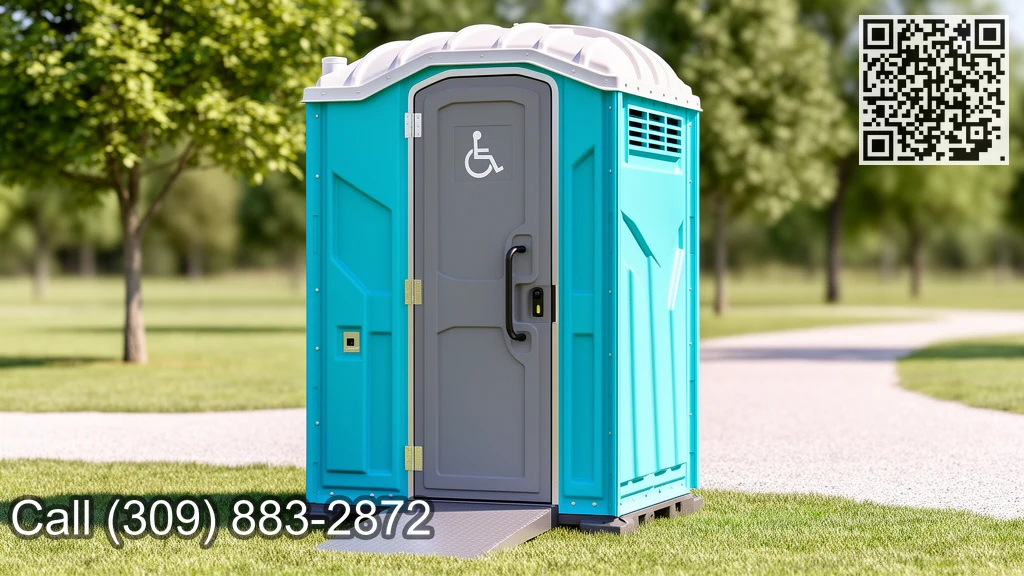
A great occasion plan deals with the ada portable restroom as component of visitor experience and risk administration at the very same time. If the available unit is too far, tough to recognize, or impossible to technique in a mobility device or various other movement gadget, the failure is immediate and visible. Individuals remember it. Personnel invest the remainder of the day improvisating around a trouble that needs to have been resolved before entrances opened.
Compliance is broader than one washroom unit
There is also a bigger context worth taking notice of. Ease of access enforcement is not standing still. In April 2026, the Division of Justice issued support prolonging the due date for state and city government internet and mobile accessibility rules to April 26, 2027 for bigger entities. That support is about electronic ease of access, not mobile commodes. Still, it reflects something crucial: ADA compliance is active across industries, and organizations are being asked to pay closer attention to gain access to in many forms.
For anyone managing physical website operations, this wider environment should be a signal. Availability is significantly viewed as a total operational responsibility, not a box to tick in one department. A team that bewares concerning on-line accessibility yet informal about an ada-compliant portable toilet on the ground is not truly assuming holistically. The very same is true in reverse.
Common judgment calls that deserve extra care
Not every problem comes with a brilliant red flag. A few of the hardest concerns being in gray areas of preparation and implementation. That is why experience matters.
A cluster might technically consist of the best variety of ada certified portable toilets, yet still leave one side of a large place underserved. A route may show up available during arrangement, after that break down after climate or hefty use. A vendor may precisely supply an ada easily accessible portable bathroom, while the host threatens compliance by fencing it off also tightly. None of those scenarios is resolved by indicating the purchase order.
The ideal drivers review the setup via the eyes of the individual that actually requires it. Can they discover the system without help? Can they get to it on the readily available surface area? Can they open and utilize it with the room offered? Is the unit operating as meant, or has surrounding site task endangered accessibility? Those inquiries sound fundamental, but they are commonly what divide a professional arrangement from a performative one.
When "ADA easily accessible" language obtains fuzzy
The rental market makes use of a number of expressions mutually: ada mobile bathroom, ada portable bathroom, ada compliant portable toilet, ada-compliant mobile washrooms, and comparable variants. From a writing and sales perspective, that is easy to understand. From a compliance perspective, it can blur crucial distinctions.
What matters is not the phrase itself but whether the provided device and its placement align with the controling criteria. A salesman might mean "this is our bigger system." A website supervisor may hear "this device satisfies everything." Those are not the exact same statement. If there is one practice worth creating, it is to ask what exactly is being offered and exactly how the website conditions will sustain access.
That is specifically https://kylerdiiv133.solsticebrief.com/posts/ada-mobile-restroom-rental-list-for-availability-conformity real when several celebrations are involved. The rental business manages stock. The event organizer regulates design. The homeowner might regulate the grounds. A basic service provider might manage hosting. Ease of access frequently falls through the spaces between them. Clear assignments aid. Somebody requires to possess the count, the course, the recognition, and the last useful problem of the setup.
A useful standard for getting it right
The cleanest method to think of an ada handicap obtainable mobile restroom is this: a person must be able to situate it, reach it, enter it, maneuver inside it, and use it without encountering obstacles developed by the short-lived nature of the site.
That criterion is more practical than legalistic, but it tracks the conformity points that matter. The device has to belong to the right count in each collection. It needs to be recognized. It has to sit on an accessible path and have an easily accessible entryway. If ramps or landings are called for, those aspects need to conform also. Inside, the technical requirements for bathroom spaces still apply, including the essential clearances and maneuvering space.
If you maintain those essentials in sight, the remainder of the decision-making obtains clearer. You quit dealing with the obtainable system as a specialty add-on and begin treating it as a core operational requirement. That change typically boosts the whole bathroom strategy, since once groups think carefully about course, placement, and use, every customer benefits.
The arrangements people bear in mind for the right reasons
The ideal mobile toilet strategies are virtually unnoticeable. Guests and workers do not stop to appreciate them. They simply function. Individuals find the toilets easily, transfer to them without problem, and use them without requiring to request favors. That is what success looks like in this edge of website planning.
An ada mobile commode leasing succeeded shows treatment prior to any person gets here. It shows up in the count, the map, the ground problems, the signage, and the last walkthrough. It also shows respect. Not performative respect, not compliance language on an agreement, yet the useful kind that lets an individual use the exact same event or center with less rubbing and even more independence.
That is the actual typical worth going for, whether you are getting one ada certified portable bathroom for a small gathering or collaborating numerous clusters of ada certified easily accessible portable bathrooms across a large short-term site. Compliance begins with the rulebook, but it succeeds in the details people actually encounter.
 Ask ChatGPT
 Ask Grok
 Ask Perplexity
 Ask Claude
 Ask Google AI
 Ask You